Master Your Hours: Science-Backed Time Management Strategies for Ambitious Hustlers
Your time is your most valuable asset. While everyone gets the same 24 hours, high performers and successful entrepreneurs know that mastering time management strategies is what separates the achievers from the dreamers. Research shows that “time stress”—that crushing feeling of never having enough hours—affects your well-being as severely as unemployment.
This isn’t just about cramming more tasks into your day. It’s about strategic time optimization that amplifies your impact while preserving your sanity. Let’s dive into science-backed approaches that will revolutionize how you think about and use your most precious resource.
The Science Behind Time Stress: Why Your Hours Matter as Much as Your Money
Harvard Business School research reveals a startling truth: time stress impacts happiness and productivity more than most people realize. When you constantly feel like you’re racing against the clock, your brain enters a state of chronic stress that diminishes decision-making abilities and creative thinking.
The data is clear—people experiencing high time stress show decreased performance across multiple metrics:
- Reduced cognitive flexibility and problem-solving skills
- Increased cortisol levels leading to burnout
- Deteriorated relationships and social connections
- Higher rates of anxiety and depression
But here’s the game-changer: effective time management strategies don’t just improve productivity—they fundamentally enhance life satisfaction. Studies tracking thousands of individuals over years demonstrate that those who master their schedules report significantly higher happiness levels and career success.
Buy Back Your Time: The Strategic Investment Approach
Smart hustlers understand that time is currency. The “buy back your time” principle involves strategically spending money on time-saving services to free up hours for high-value activities. This isn’t about being lazy—it’s about optimizing your resource allocation.
Research confirms that people who spend money on time-saving purchases experience greater life satisfaction than those who spend the same amount on material goods. Consider these strategic investments:
- Outsourcing routine tasks: Cleaning, grocery shopping, basic administrative work
- Automation tools: Scheduling software, automated bill payments, meal delivery services
- Professional services: Accountants, virtual assistants, specialized contractors
The key is calculating your hourly value and outsourcing anything below that rate. If you earn $100 per hour, paying someone $25 to handle tasks frees you to focus on revenue-generating activities.
Protecting Your Hustle: Defending Time for What Matters Most
The highest performers don’t just work harder—they work strategically. Protecting time for relationships, rest, and meaningful pursuits isn’t optional; it’s essential for sustainable success. Longitudinal studies show that people who actively defend time for quality activities experience the biggest boost in well-being.
Implement these protective strategies:
- Time blocking: Schedule non-negotiable blocks for important relationships and self-care
- Digital boundaries: Establish specific hours for email and social media
- Energy management: Align demanding tasks with your peak energy periods
- Recovery rituals: Build in consistent rest and rejuvenation practices
Remember, burnout isn’t a badge of honor—it’s a productivity killer that undermines everything you’re working toward.
Time-Based Planning: Building Unstoppable Momentum
Traditional goal-setting often fails because it lacks temporal structure. Time-based planning transforms vague aspirations into actionable roadmaps with built-in accountability. This approach involves three core components:
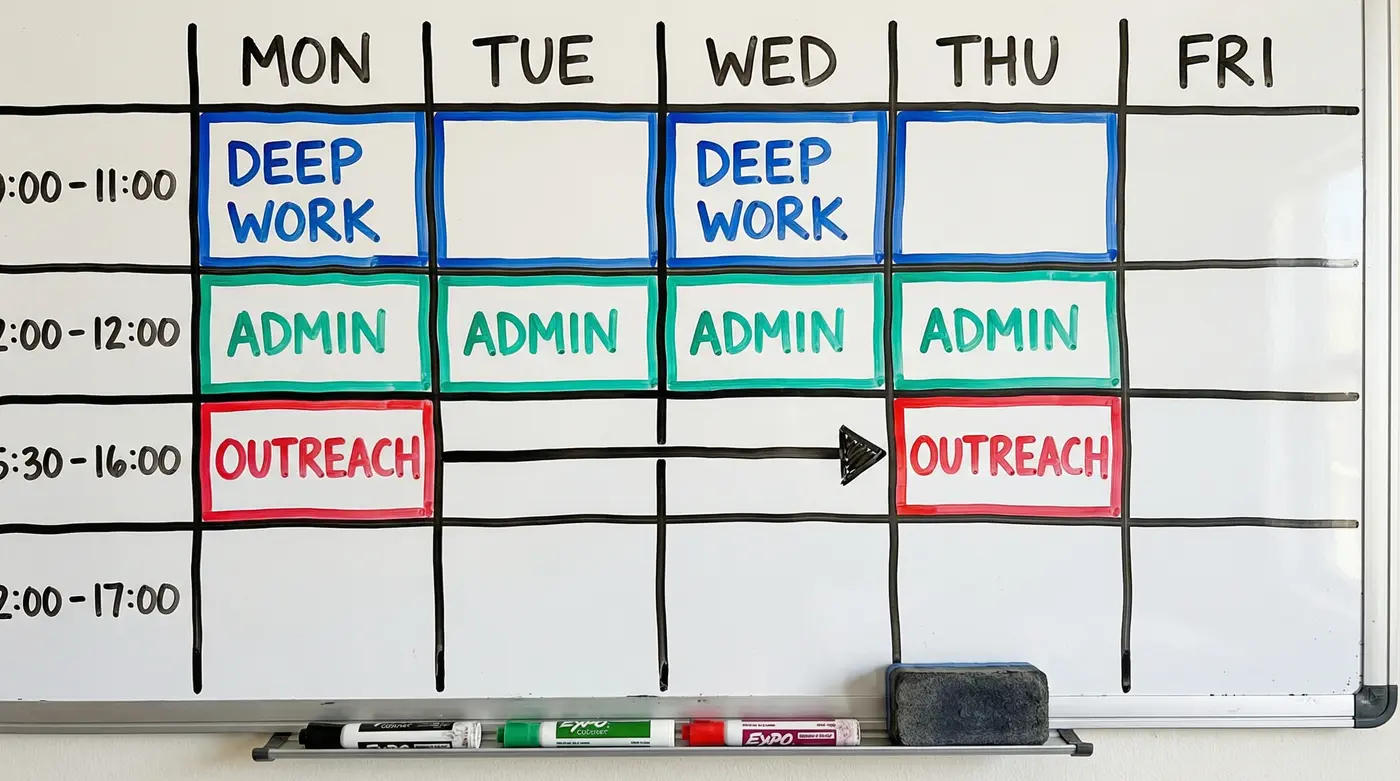
Time Audits: Know Where Your Hours Actually Go
Before optimizing your schedule, you need baseline data. Track your time for one week using tools like RescueTime or Toggl. Most people are shocked to discover how much time they lose to low-value activities.
SMART Goals with Time-Bound Milestones
Transform abstract objectives into specific, measurable targets with clear deadlines. Instead of “grow my business,” try “increase monthly recurring revenue by 25% within 90 days through targeted outreach to 50 qualified prospects weekly.”
Quarterly Sprint Cycles
Break your year into four focused quarters, each with 2-3 major objectives. This creates manageable chunks while maintaining long-term vision. Review and adjust quarterly to stay agile and responsive to changing conditions.
AI and Automation: Your Digital Productivity Arsenal
The most successful entrepreneurs leverage technology to amplify their efforts. Modern time management strategies integrate AI and automation tools that handle routine tasks while you focus on high-impact work.
Essential tools for streamlined workflows:
- HubSpot: Automates customer relationship management and provides real-time analytics for data-driven decisions
- Canva Pro: AI-powered design tools that create professional marketing materials in minutes, not hours
- Buffer: Social media scheduling and analytics that optimize posting times for maximum engagement
- Zapier: Connects different apps to automate repetitive workflows and data transfers
One case study showed a creative agency reducing project delivery time by 40% simply by implementing two-week sprint cycles and automated client feedback loops.
The Choice Mindset: Valuing Time Over Money
Research reveals that people who prioritize time over money consistently report higher life satisfaction. This “choice mindset” involves making decisions based on what you want to do, not what you feel obligated to do.
Practical applications:
- Choose the faster commute over the cheaper option
- Invest in tools and services that save time, even if they cost more
- Say no to opportunities that don’t align with your priorities
- Focus on high-impact activities rather than busy work
This mindset shift transforms how you evaluate opportunities and allocate resources, leading to more intentional and fulfilling choices.
Real-World Case Studies: How Top Performers Optimize Their Time
Learning from successful entrepreneurs provides concrete examples of effective time management strategies in action.
Case Study 1: SaaS Startup Founder
A software company founder increased annual recurring revenue by 150% in one year by implementing monthly subscription models and automated renewal processes. Key strategies included time-blocking for customer development calls and using AI tools for initial customer support queries.
Case Study 2: Marketing Agency Owner
An agency reduced client project timelines by 35% while improving satisfaction scores by adopting agile methodologies. They implemented two-week sprints with real-time client feedback loops and automated progress reporting.
Case Study 3: E-commerce Entrepreneur
An online retailer tripled their social media engagement while reducing content creation time by 60% using Buffer for scheduling and Canva Pro for rapid design iteration. They focused on data-driven posting optimization rather than posting frequency.
Avoiding Burnout: Sustainable High Performance
The most successful people aren’t those who work the most hours—they’re those who work the right hours with the right intensity. Sustainable time management strategies prevent burnout while maintaining peak performance.
Key principles for sustainable hustle:
- Energy over time: Match your most important work to your peak energy periods
- Recovery rituals: Build in consistent rest and rejuvenation practices
- Progress over perfection: Focus on consistent forward movement rather than flawless execution
- Systems over goals: Create repeatable processes that generate results automatically

Remember, marathon runners don’t sprint the entire race. Pace yourself for long-term success.
Must-Have Productivity Tools for Ambitious Hustlers
Your digital arsenal should amplify your efforts, not complicate them. Here are the essential categories and specific recommendations:
Project Management
- Asana: Team collaboration and task tracking
- Monday.com: Visual project workflows
- Trello: Simple kanban-style organization
Time Tracking and Analytics
- RescueTime: Automatic time tracking and productivity insights
- Toggl: Manual time tracking with detailed reporting
- Clockify: Free team time tracking
Communication and Automation
- Slack: Team messaging with integration capabilities
- Calendly: Automated scheduling
- Make (formerly Integromat): Advanced workflow automation
Building a GSD Lifestyle: Discipline Meets Smart Strategy
True success comes from combining relentless discipline with intelligent strategy. The Get Shit Done mindset isn’t about working yourself into the ground—it’s about making every hour count toward your bigger vision.
Core principles for the GSD lifestyle:
- Intentional choices: Every decision should align with your priorities
- Continuous optimization: Regularly review and refine your systems
- Results focus: Measure outcomes, not just activities
- Community support: Surround yourself with other high performers
The most successful entrepreneurs understand that time management strategies are not just about productivity—they’re about creating the life and business you actually want.
Your Next Steps: Implementing These Strategies Today
Knowledge without action is worthless. Here’s your immediate action plan:
- This week: Complete a time audit to understand your current patterns
- Next week: Implement one automation tool from the list above
- This month: Establish quarterly planning cycles and set your next 90-day objectives
- Ongoing: Regularly review and optimize your systems
Remember, the goal isn’t perfection—it’s progress. Start with one strategy and build momentum from there.
Ready to level up your productivity game? The hustlers who master their time are the ones who ultimately master their destiny. Your future self will thank you for the systems you build today.
Ready to gear up for success? Check out our collection of motivational apparel designed for high performers who live by the Get Shit Done philosophy. When you look the part, you perform the part.