12 Monthly Ways to Get More Done: GSD Apparel’s Ultimate Playbook for Relentless Hustlers
Success isn’t built in a day—it’s forged through consistent monthly momentum. While most people make grand resolutions that fizzle out by February, true hustlers know the secret: breaking down productivity into manageable monthly focuses that compound into extraordinary results. This comprehensive playbook delivers 12 monthly ways to get more done, each designed to elevate your hustle and maximize your output throughout the entire year.
Whether you’re an entrepreneur building your empire, a side-hustler grinding after hours, or a high-performer climbing the corporate ladder, this monthly productivity framework will transform how you approach each month. Let’s dive into the strategies that separate the achievers from the dreamers.
January: Master the 2-Minute Rule for Instant Momentum
Kickstart your year by implementing the 2-minute rule—if a task takes less than two minutes, do it immediately instead of adding it to your to-do list. This simple strategy eliminates the mental clutter of small tasks that pile up and drain your energy.
January’s focus should be on building this habit into your daily routine. Whether it’s responding to quick emails, filing documents, or making brief phone calls, the 2-minute rule creates instant momentum and prevents small tasks from becoming overwhelming backlogs.
Action Steps for January:
- Identify recurring 2-minute tasks in your workflow
- Set up systems to handle these tasks immediately
- Track your progress with a simple tally system
- Celebrate the mental clarity that comes from clearing small tasks instantly
February: Embrace the 1-3-5 Task Method for Strategic Focus
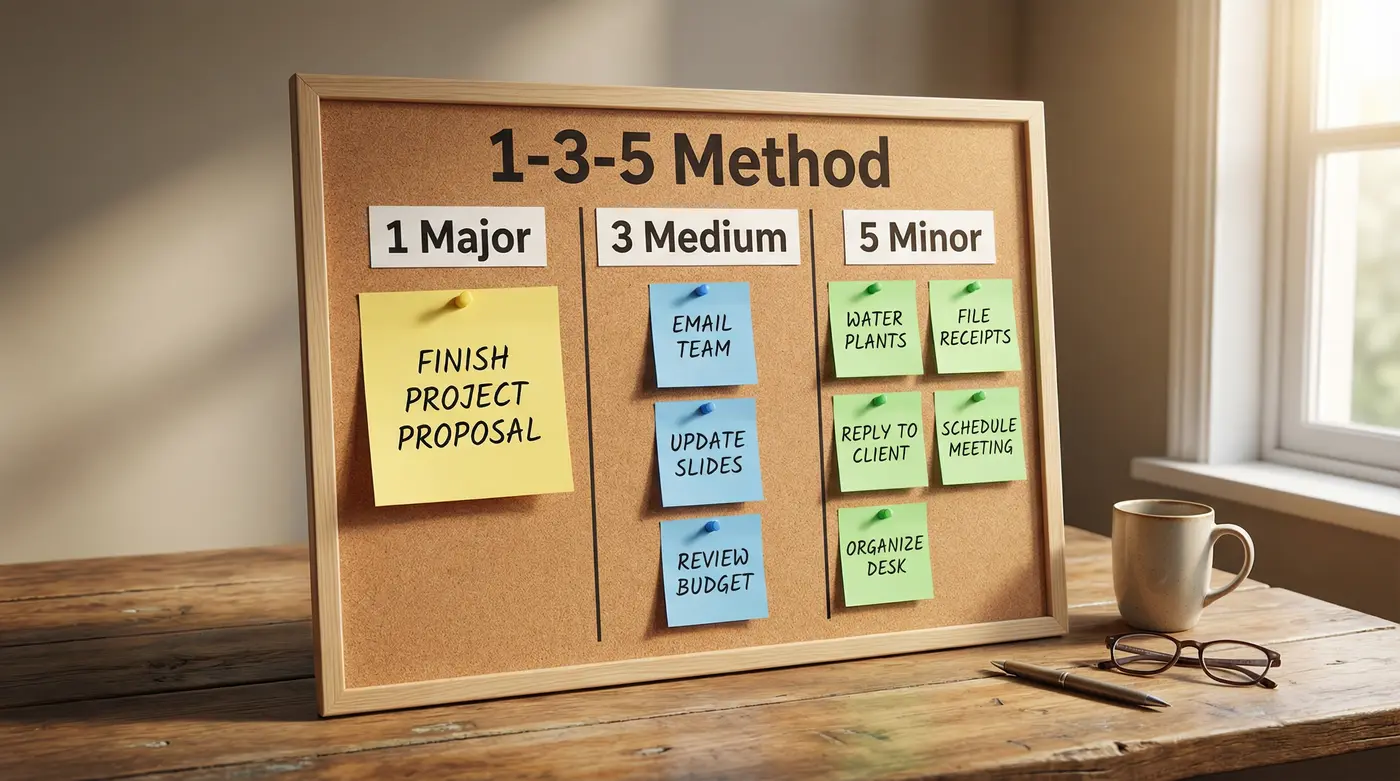
February is about strategic task prioritization using the 1-3-5 method. Each day, commit to completing 1 major task, 3 moderate tasks, and 5 minor tasks. This framework prevents overwhelm while ensuring you tackle high-impact work daily.
This method forces you to be realistic about your capacity while maintaining focus on what truly matters. The beauty lies in its simplicity—you’re not juggling endless to-do lists, but rather making deliberate choices about where to invest your energy.
March: Leverage the Kanban Method for Visual Workflow Management
March marks the quarter’s end, making it perfect for implementing visual workflow management through the Kanban method. Create three columns: To Do, In Progress, and Done. This visual system provides immediate clarity on your workload and progress.
Digital tools like Trello, Asana, or Notion can supercharge your Kanban boards with automation, due dates, and team collaboration features. The visual nature of Kanban reduces mental load while increasing accountability.
April: Implement Pomodoro Technique for Deep Work Sessions
April’s focus centers on maximizing concentration through the Pomodoro Technique. Work in focused 25-minute intervals followed by 5-minute breaks, with longer breaks after every four cycles. This method combats decision fatigue while maintaining peak mental performance.
The spring energy of April makes it ideal for establishing new work rhythms. Use this month to experiment with different interval lengths and find your optimal focus periods.
May: Apply the Eisenhower Matrix for Priority Management
May brings the Eisenhower Matrix into focus—categorizing tasks by urgency and importance. This framework helps you identify what to do first, schedule for later, delegate, or eliminate entirely. It’s one of the most powerful monthly ways to get more done by ensuring you work on the right things.
Create four quadrants: Important & Urgent, Important & Not Urgent, Not Important & Urgent, and Not Important & Not Urgent. This visual tool transforms how you approach task management and prevents reactive work patterns.
June: Automate Recurring Tasks and Streamline Operations
Mid-year is perfect for automation. June focuses on identifying repetitive tasks and implementing systems to handle them automatically. From email filters to social media scheduling, automation frees up mental bandwidth for high-value activities.
Automation opportunities to explore:
- Email templates and auto-responses
- Social media scheduling tools
- Recurring payment setups
- Automated file organization systems
- Calendar scheduling tools
July: Master Time-Blocking and Batch Similar Tasks
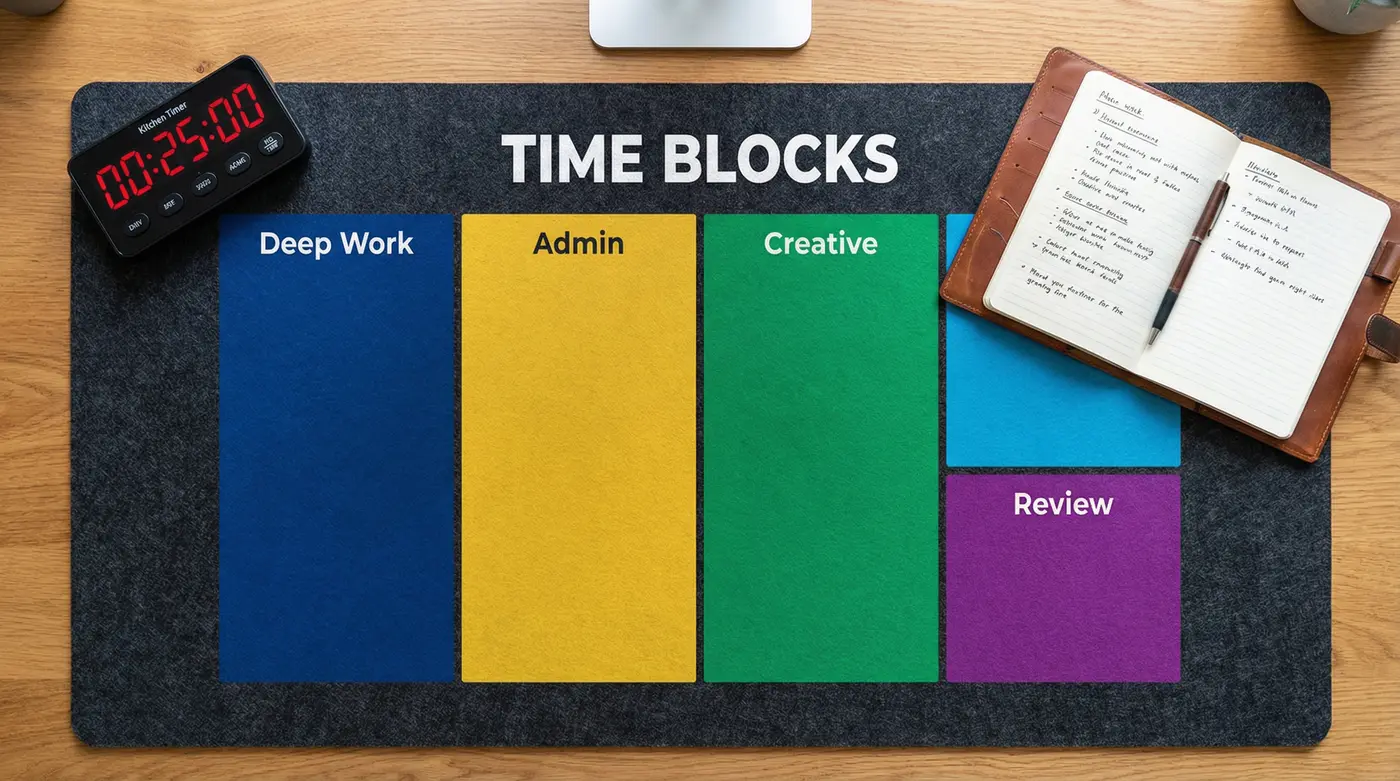
July’s heat demands efficient time management. Implement time-blocking by assigning specific time slots to different types of work. Batch similar tasks together—answer all emails at once, make all phone calls in sequence, and group creative work into dedicated blocks.
This approach minimizes context switching, which can reduce productivity by up to 40%. July’s long days provide ample opportunity to establish these time-blocking rhythms.
August: Reduce Decision Fatigue with Minimalist Routines
August focuses on reducing decision fatigue through systematic routine building. Create a capsule wardrobe, establish morning routines, and standardize recurring decisions. When you eliminate minor decisions, you preserve mental energy for crucial choices.
Consider meal prepping, creating template responses, and establishing standard operating procedures for routine tasks. The goal is to make good choices automatically rather than repeatedly.
September: Harness Parkinson’s Law with Tighter Deadlines
September brings a back-to-school energy perfect for implementing Parkinson’s Law—work expands to fill the time allotted. Set artificially tighter deadlines to increase efficiency and reduce procrastination.
Challenge yourself to complete tasks in 75% of the time you’d normally allocate. This creates urgency that drives focus and eliminates perfectionism paralysis.
October: Eliminate Distractions and Create Focus-Friendly Environments
October’s focus is distraction elimination. Conduct a digital decluttering challenge, silence unnecessary notifications, and create physical environments that promote deep work. Your environment shapes your productivity more than you realize.
Distraction elimination tactics:
- Turn off non-essential notifications
- Use website blockers during focus hours
- Create a dedicated workspace
- Establish phone-free work periods
- Implement a clean desk policy
November: Schedule Regular Reviews and Success Tracking
November emphasizes reflection and optimization. Implement weekly and monthly review sessions to assess progress, identify bottlenecks, and adjust strategies. Keep a success journal to document wins and lessons learned.
Regular reviews prevent you from grinding in the wrong direction. They ensure your monthly ways to get more done are actually moving you toward your larger goals.
December: Prioritize Wellness for Sustained Performance
December balances intense productivity with sustainable wellness practices. Build in strategic breaks, micro-naps, and gratitude practices. High performance requires recovery, not just relentless action.
Establish boundaries between work and rest, prioritize sleep quality, and incorporate brief mindfulness practices. Sustainable productivity beats burnout every time.
Building Your GSD Community and Accountability
Throughout all twelve months, leverage the power of community accountability. Share your monthly goals with fellow hustlers, join productivity challenges, and inspire others with your progress. The GSD community thrives on collective motivation and shared success stories.
Document your journey on social media, participate in monthly productivity challenges, and celebrate both small wins and major milestones. When you share your commitment publicly, you’re more likely to follow through.
The No-Excuses Mindset: Progress Over Perfection
The foundation of all these monthly ways to get more done is the GSD mindset: progress over perfection, relentless action over endless planning, and consistent effort over sporadic intensity. Each month builds upon the last, creating compound productivity gains that separate high achievers from the rest.
Remember, productivity isn’t about working more hours—it’s about making every hour count. These monthly focuses provide structure while maintaining flexibility to adapt to your unique circumstances and goals.
Your Monthly Productivity Toolkit
To maximize these strategies, leverage technology that amplifies your efforts. Digital tools like Trello for visual project management, Asana for team collaboration, Notion for all-in-one workspace organization, and AI-powered apps for automation can 10x your productivity when used strategically.
The key is choosing tools that integrate seamlessly with your workflow rather than adding complexity. Start with one or two core tools and master them before expanding your tech stack.
Success leaves clues, and the most successful people have systems, not just goals. This monthly playbook provides the framework—your commitment provides the fuel. Whether you’re building a business, climbing the corporate ladder, or pursuing personal projects, these monthly ways to get more done will transform your results.
Ready to join the ranks of relentless achievers? Start with January’s 2-minute rule and build momentum month by month. Your future self will thank you for the systems you implement today. Remember, champions aren’t made in comfort zones—they’re forged through consistent, strategic action.
The grind never stops, but with the right approach, it gets easier, more efficient, and infinitely more rewarding. Welcome to your most productive year yet. Explore daily ways and time management tactics to level up even further.