How High-Performing Streetwear Brands Maximize Your Workflow: GSD’s Blueprint for Success
In the fast-paced world of streetwear, where trends shift overnight and customer expectations soar higher than ever, one thing separates the winners from the wannabes: their ability to maximize your workflow. At GSD Apparel, we’ve built our entire operation around the principle that success isn’t just about working harder—it’s about working smarter, faster, and with relentless precision.
Whether you’re launching your first collection or scaling a thriving streetwear empire, the brands that dominate in today’s market have mastered the art of workflow optimization. They’ve cracked the code on turning chaos into clockwork, transforming scattered processes into streamlined powerhouses that deliver results consistently.
Why Workflow Optimization is Non-Negotiable for Ambitious Streetwear Brands
The streetwear game has evolved dramatically. Gone are the days when you could rely solely on creative vision and hustle culture to carry your brand to success. Today’s winning brands understand that operational excellence is the foundation of everything they do.
When you maximize your workflow, you’re not just improving efficiency—you’re creating competitive advantages that compound over time. Every minute saved in your design process is a minute gained in market research. Every streamlined approval cycle means faster product drops and quicker responses to trending topics.
Consider this: while your competitors are stuck in endless email chains debating design revisions, optimized brands are already moving to production. While others struggle with inventory management, workflow-optimized companies are using AI-powered systems to predict demand and position stock strategically across distribution centers.
The numbers don’t lie. Brands that implement comprehensive workflow optimization see average productivity increases of 25-40%, reduced time-to-market by up to 50%, and significantly improved team satisfaction and retention rates.
Mapping and Standardizing Your Creative and Marketing Processes: The GSD Approach
At GSD Apparel, we believe that chaos is the enemy of greatness. That’s why we’ve developed a systematic approach to mapping and standardizing every aspect of our creative and marketing workflows.
The first step to maximize your workflow is understanding exactly what your current processes look like. Most brands operate with invisible workflows—everyone knows roughly what to do, but there’s no clear documentation of who does what, when, and how.
Start by documenting every step of your design process, from initial concept sketching to final product photography. Map out your marketing campaigns from ideation to execution. Identify every handoff point, every approval stage, and every potential bottleneck.
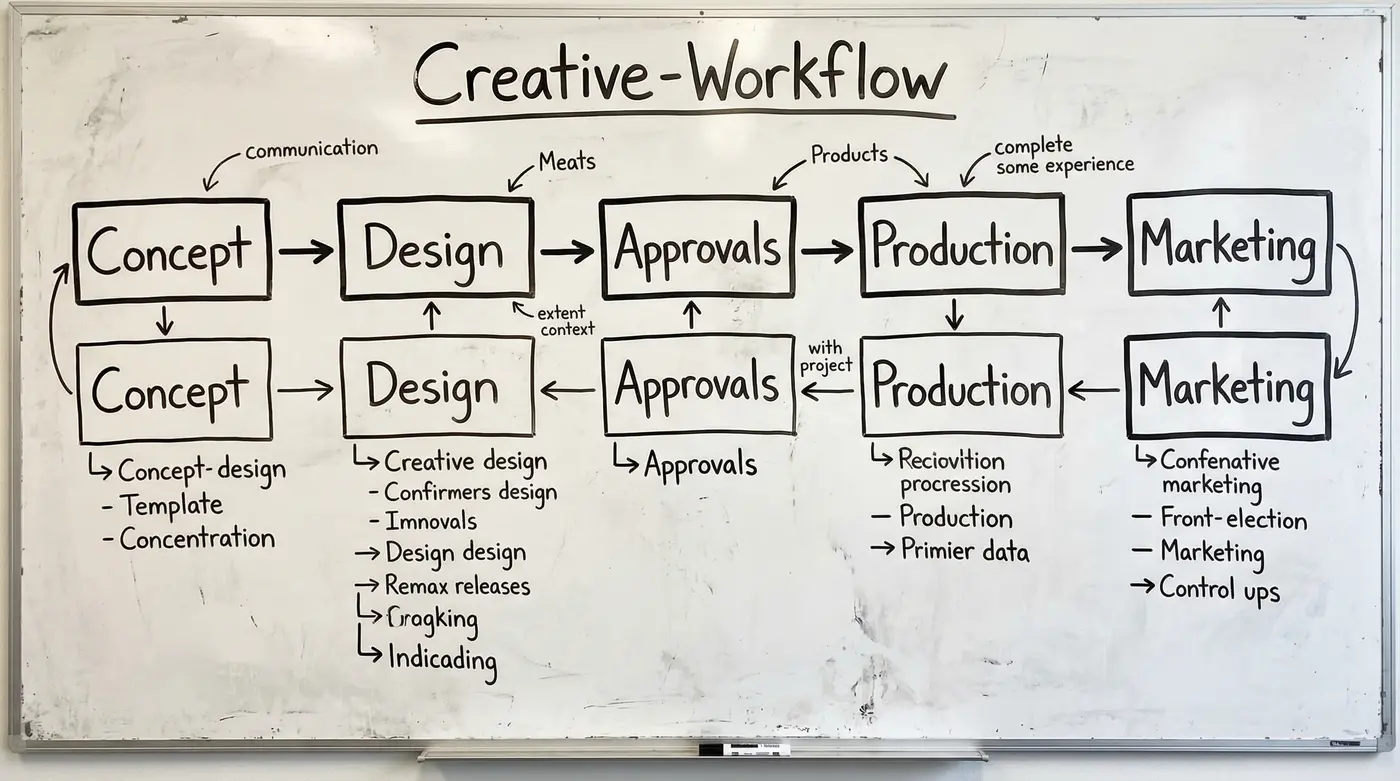
Once you have visibility into your processes, standardization becomes possible. Create templates for design briefs, approval workflows, and campaign launches. Establish clear timelines and responsibilities. Most importantly, build in regular review points to catch issues before they become problems.
Our team uses standardized project templates that ensure consistency across all our product launches. Whether we’re dropping a new motivational hoodie design or launching a social media campaign, everyone knows exactly what needs to happen, by when, and who’s responsible for making it happen.
Leveraging Automation: How to Cut Wasted Time and Let Your Team Focus on What Matters Most
Automation isn’t about replacing human creativity—it’s about eliminating the mundane tasks that prevent your team from doing their best work. When you strategically automate repetitive processes, you free up mental energy and time for the high-value activities that actually move your brand forward.
To effectively maximize your workflow through automation, focus on these key areas:
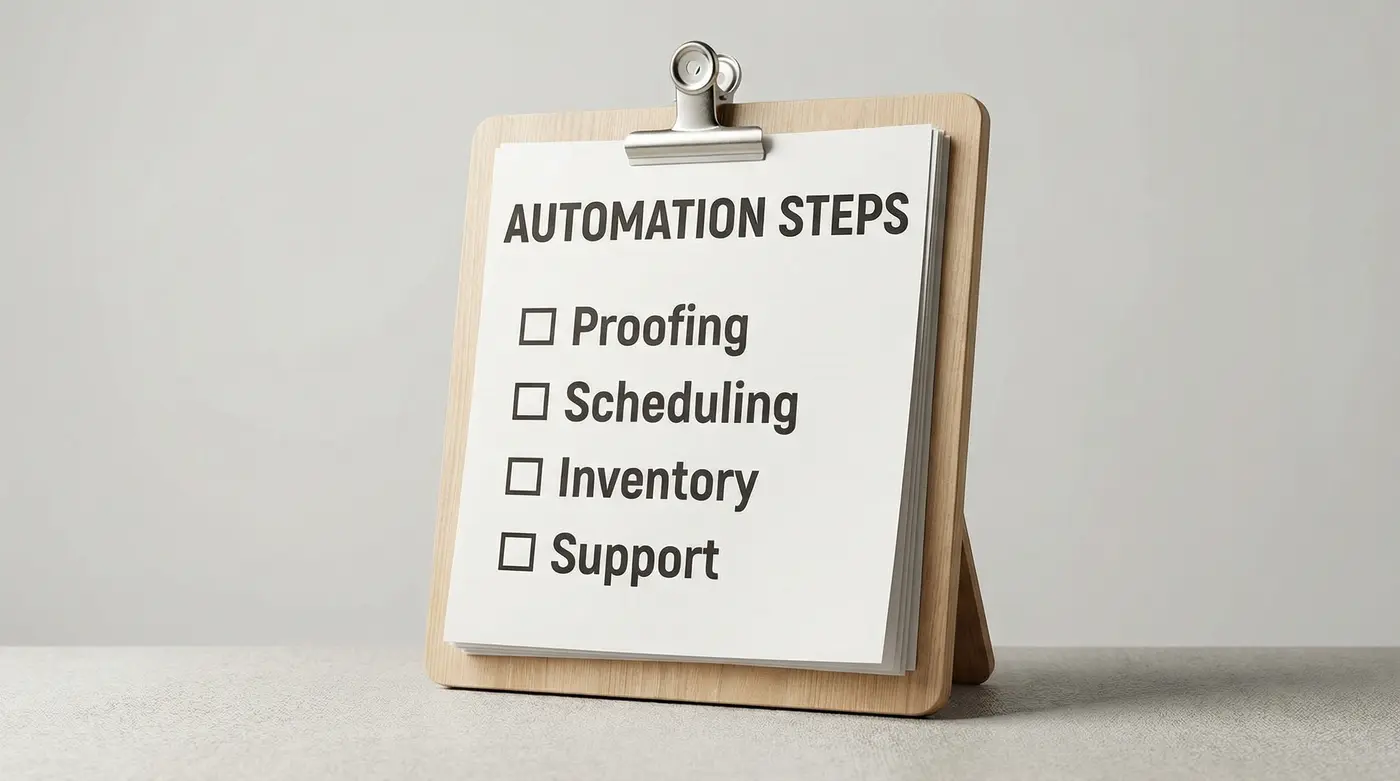
Proof Routing and Approvals: Implement digital proofing systems that automatically route designs to the right stakeholders, track feedback, and consolidate revisions. No more hunting through email threads for the latest comments.
Social Media Scheduling: Use automation tools to maintain consistent posting schedules across platforms while your team focuses on creating engaging content and responding to community interactions.
Inventory Management: Deploy AI-powered systems that automatically reorder popular items, alert you to low stock levels, and optimize inventory placement based on regional demand patterns.
Customer Service: Implement chatbots for common inquiries while ensuring complex issues are seamlessly transferred to human representatives who can provide the personal touch that builds brand loyalty.
The key is finding the sweet spot between efficiency and authenticity. Automate the logistics, but preserve the human connection that makes your brand special.
The Power of Digital Proofing, Centralized Feedback, and Real-Time Collaboration
Nothing kills momentum like scattered feedback and version control chaos. When your design team is working with outdated files, or when stakeholders are providing conflicting input through different channels, your workflow grinds to a halt.
Digital proofing systems are game-changers for brands looking to maximize your workflow. These platforms centralize all feedback in one location, maintain clear version histories, and ensure everyone is always working with the most current files.
Real-time collaboration tools allow multiple team members to contribute simultaneously without stepping on each other’s work. Designers can iterate quickly, marketers can provide immediate input, and decision-makers can approve changes without delays.
At GSD, we’ve implemented strict feedback timelines—stakeholders have 24 hours to provide input on design proofs, and we limit reviewers to only essential decision-makers. This prevents the endless revision cycles that plague many creative projects.
Cloud-based collaboration ensures our team can maintain productivity whether they’re working from the office, home, or anywhere else. The result? Faster product drops, more responsive marketing campaigns, and a team that stays aligned on priorities and deadlines.
Applying Supply Chain Optimization: Using AI, Digital Twins, and Frequent Reviews
Your supply chain is either your secret weapon or your biggest weakness—there’s rarely middle ground in today’s competitive landscape. Forward-thinking streetwear brands are revolutionizing their operations by applying cutting-edge optimization techniques that were once exclusive to Fortune 500 companies.
To truly maximize your workflow, you need to think beyond traditional quarterly supply chain reviews. Leading brands now conduct monthly or even weekly assessments, using advanced modeling tools to continuously optimize their networks.
Digital Twin Technology: Create virtual models of your entire supply chain to simulate different scenarios and stress-test for resilience. What happens if your primary manufacturer experiences delays? How would a sudden spike in demand for a viral design affect your fulfillment times?
AI-Powered Demand Forecasting: Machine learning algorithms can analyze social media trends, search patterns, and historical data to predict which designs will resonate with your audience. This allows you to position inventory strategically and avoid both stockouts and overproduction.
Total Cost-to-Serve Analysis: Look beyond simple product costs to understand the true expense of delivering each item to customers. Factor in procurement, transport, labor, inventory management, and facility costs to make informed decisions about pricing, minimum order quantities, and fulfillment strategies.
Regular network optimization ensures your inventory is always positioned to meet service level commitments while minimizing costs. When you can deliver faster than competitors while maintaining healthy margins, you’ve created a sustainable competitive advantage.
Connecting Operational Discipline to Hustle Culture: Working Smarter, Not Just Harder
The hustle culture that drives streetwear isn’t just about grinding 24/7—it’s about channeling that relentless energy into systems that compound your efforts. True hustlers understand that operational discipline multiplies their impact.
When you maximize your workflow, you’re embodying the “Work Harder. Demand More. Compromise Less.” mindset that defines the GSD community. You’re refusing to accept inefficiency, demanding excellence from your processes, and never compromising on the standards that separate champions from also-rans.
This connection between operational excellence and hustle culture is what transforms good brands into legendary ones. Every optimized process is a testament to your commitment to continuous improvement. Every automated task is proof that you’re thinking strategically about how to scale your impact.
The most successful entrepreneurs in streetwear understand that systematic thinking doesn’t kill creativity—it amplifies it. When your operational foundation is rock-solid, your team has the mental bandwidth to innovate, experiment, and push boundaries.
Building a Resilient, High-Output Team: Post-Project Audits and Continuous Improvement
Resilient teams aren’t built overnight—they’re forged through consistent practices that turn every project into a learning opportunity. The brands that consistently maximize your workflow have embedded continuous improvement into their DNA.
Post-project audits are non-negotiable for high-performing teams. After every product launch, marketing campaign, or major initiative, gather your team to examine what worked, what didn’t, and what you’ll do differently next time.
Ask the hard questions: Where did bottlenecks occur? Which assumptions proved wrong? How could communication have been clearer? What would you do differently if you could run the project again?
Document these insights and integrate them into future workflows. Create playbooks that capture your team’s collective wisdom. Build templates that incorporate lessons learned from previous projects.
The “Compromise Less” mindset means never settling for “good enough” when “excellent” is possible. It means viewing every inefficiency as an opportunity for improvement, every mistake as a chance to build better systems.
High-output teams also understand the importance of clear roles and responsibilities. When everyone knows exactly what they’re accountable for, decisions get made faster, work gets done more efficiently, and results improve dramatically.
Blending Tech with the Human Touch: Balancing Automation and Authentic Community Engagement
The most successful D2C streetwear brands understand a crucial truth: while technology enables scale, human connection drives loyalty. The goal isn’t to replace human interaction with automation—it’s to use technology strategically so your team can focus on the high-value interactions that build lasting relationships.
When you maximize your workflow through smart automation, you create space for authentic engagement with your community. While chatbots handle routine inquiries, your team can focus on meaningful conversations with customers, respond to user-generated content, and build the personal connections that turn buyers into brand evangelists.
At GSD, we use automation to handle logistics and administrative tasks, but we prioritize human interaction for onboarding new customers, handling returns, and engaging with our community on social media. This approach allows us to maintain the personal touch that makes our brand special while operating efficiently at scale.
The key is understanding where human expertise adds the most value. Use automation for repetitive tasks, data processing, and routine communications. Reserve human energy for creative problem-solving, relationship building, and the nuanced decisions that require emotional intelligence and cultural awareness.
Activating Your Community: Empowering GSD Customers as Brand Advocates and Micro-Entrepreneurs
Your customers aren’t just buyers—they’re potential business partners, brand ambassadors, and micro-entrepreneurs waiting to be activated. The most innovative streetwear brands are building communities that go far beyond traditional customer relationships.
Consider implementing referral programs that reward customers for introducing others to your brand. Create ambassador programs that provide training, tools, and commission structures for customers who want to represent your brand in their networks.
User-generated content is pure gold for streetwear brands. When customers share photos wearing your gear, tag friends in motivational posts, or create content inspired by your brand messaging, they’re doing marketing work that’s more authentic and effective than anything you could produce internally.
To maximize your workflow in community building, create systems that make it easy for customers to share, promote, and earn from their advocacy. Develop content templates they can customize, provide high-quality brand assets, and establish clear guidelines for representing your brand.
The rise of flexible work and entrepreneurial mindsets means many of your customers are looking for ways to generate additional income. By providing opportunities for them to earn through referrals, affiliate marketing, or direct sales, you’re not just building a customer base—you’re building a distributed sales force of people who genuinely believe in your brand.
Actionable Steps to Maximize Your Workflow
Ready to transform your streetwear brand’s operations? Here’s your roadmap to maximize your workflow and join the ranks of high-performing brands that dominate their markets:
Week 1-2: Audit and Map
Document your current processes from end to end. Identify bottlenecks, redundancies, and gaps in your workflows. Create visual maps of how work currently flows through your organization.
Week 3-4: Standardize and Template
Develop standardized templates for recurring processes. Create approval workflows with clear timelines and responsibilities. Establish project management systems that provide visibility into progress and priorities.
Week 5-8: Implement Automation
Deploy digital proofing systems for design reviews. Set up automated social media scheduling. Implement inventory management tools that provide real-time visibility and automated reordering.
Week 9-12: Optimize and Scale
Analyze your supply chain for optimization opportunities. Implement AI-powered demand forecasting. Establish regular review cycles for continuous improvement.
Ongoing: Measure and Improve
Conduct post-project audits after every major initiative. Track key metrics like time-to-market, customer satisfaction, and team productivity. Continuously refine your processes based on data and feedback.
Remember, the goal isn’t perfection from day one—it’s consistent progress toward operational excellence. Every small improvement compounds over time, creating competitive advantages that become harder for competitors to replicate.
Ready to take your streetwear brand to the next level? Check out GSD Apparel’s collection of motivational gear designed for entrepreneurs and hustlers who refuse to compromise on their standards. Our “Work Harder. Demand More. Compromise Less.” philosophy isn’t just printed on our clothes—it’s embedded in everything we do, from our optimized workflows to our commitment to helping our community succeed.
Whether you’re just starting your entrepreneurial journey or scaling an existing operation, the principles of workflow optimization will serve as the foundation for sustainable success. Start implementing these strategies today, and join the ranks of high-performers who understand that true success comes from working smarter, not just harder.